The data and rankings platform for Arab universities
يحظى تصنيف مؤسسات التعليم العالي بأهمية بالغة على المستوى العالمي، لأنه يعكس مكانة المؤسسة التعليمية بين مؤسسات التعليم العالي المحلية والعالمية، ويؤكد على نقاط القوة فيها، ويبين مجالات التطوير المحتملة، ومن هذا المنطلق، سعت هيئة تقويم التعليم والتدريب إلى المساهمة في تعزيز الجودة والتميز في مؤسسات وبرامج التعليم العالي، عن طريق تصنيف تلك المؤسسات والذي يعد امتدادًا وتكاملًا مع الاعتماد المؤسسي والبرامجي، وإسهامًا في التطوير المستمر، والتنافسية الإيجابية التي تنعكس على جودة الأداء ، وتسهم بدورها في تطوير المعرفة وتطبيقها ونشرها من خلال التعليم والبحث العلمي، وتعزيز المسؤولية المجتمعية والتطوع، مما يُعد من أهم ركائز التنمية الشاملة في المملكة العربية السعودية، ومن أهم العوامل الرئيسة لتحقيق الأهداف الطموحة لرؤية المملكة 2030 ،ومن هنا تم إدراج تصنيف مؤسسات التعليم العالي كأحد مبادرات برنامج تنمية القدرات البشرية ضمن محفظة مبادرات الركيزة الثانية لضمان نظام تعليم عالي وتدريب تقني ومهني مسؤول بأعلى المعايير.
الرياض ٢٨ شعبان ١٤٤٦ هـ الموافق ٢٧ فبراير ٢٠٢٥ م واس
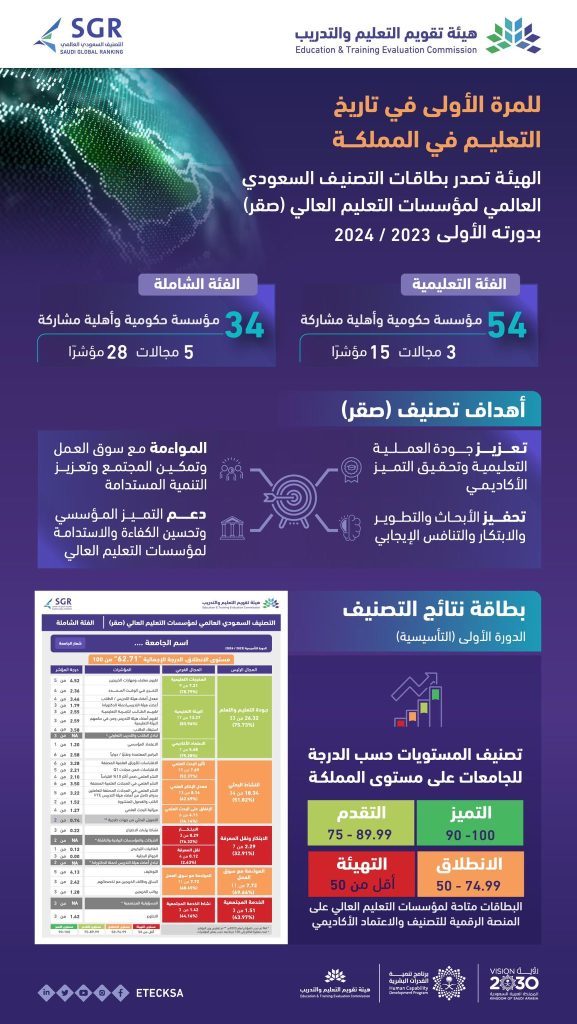
أصدرت هيئة تقويم التعليم والتدريب نتائج التصنيف السعودي العالمي لمؤسسات التعليم العالي (صقر) في دورته الأولى (الدورة التأسيسية) ٢٠٢٣ / ٢٠٢٤، التي شملت تصنيف ٥٤ مؤسسة تعليم عالٍ حكومية وأهلية.
The classification includes two categories: the educational category, which includes indicators of educational performance that apply to all public and private higher education institutions, and includes 15 indicators within 3 fields; and the comprehensive category, which includes indicators that measure scientific research outputs, innovation, and knowledge transfer, and applies to public and private higher education institutions that have research activity, and includes 28 indicators within 5 fields.
Based on the score the university receives in each indicator and its overall score, it is classified into one of four performance levels: Excellence Level (total score 90% and above), Progress Level (total score from 75% to 89.99%), Launch Level (total score from 50% to 74.99%), and Preparation Level (total score less than 50%).
The ranking indicators included elements related to the quality of the outputs of the participating universities, based on the performance of their graduates in standardized and professional tests conducted by the authority, including the "Jahiziyah" program tests, educational professional license tests, as well as professional tests conducted by other professional bodies such as the Saudi Commission for Health Specialties. The quality of output indicators also includes the employment rate of the university's graduates.
The higher education institution ranking initiative, implemented by the Commission in coordination and integration with the Council of Universities Affairs, comes within the initiatives of the Human Capability Development Program assigned to the Commission. It aims to enhance the quality of higher education in the Kingdom, stimulate excellence and positive competition within it, and enable students and other entities to make appropriate decisions. It is also linked to a number of national higher education targets, including improving the ranking of educational institutions in global rankings.
The commission provided participating universities with a special report on their individual results in the ranking through the digital platform for ranking and academic accreditation. The ranking reports included the evaluation results of the participating universities' performance in each ranking category, including the university's score in each indicator, the total score, and the level in which the university was classified among the four ranking levels.
It is noted that in addition to the (Saqr) ranking for higher education institutions, the authority previously launched the school evaluation, classification, and accreditation program to evaluate and classify all public, private, and international schools in the Kingdom, which number more than 24,000 schools. The authority announced the first batch of school ranking results during the National Forum for School Excellence.
The authority also recently launched the National Training Evaluation Program, which aims to evaluate and classify all government and private training institutions in the Kingdom, numbering approximately 500 institutions. The results of the training institution classification are scheduled to be released during the next academic year.
وتأتي هذه البرامج والمبادرات ضمن جهود الهيئة بالتكامل مع الجهات الوطنية لتعزيز جودة التعليم في المملكة، والإسهام في تحقيق رؤية المملكة ٢٠٣٠ ومستهدفات برنامج تنمية القدرات البشرية.